- Barry Yeoman: Unabridged
- Posts
- My latest: The Price We Pay
My latest: The Price We Pay
Dollar stores promise low prices to customers who desperately need the savings—and then, we found, overcharge them. Plus, good writing about the Southern immigration busts and some shipwreck music.

Barry Yeoman
December 03, 2025
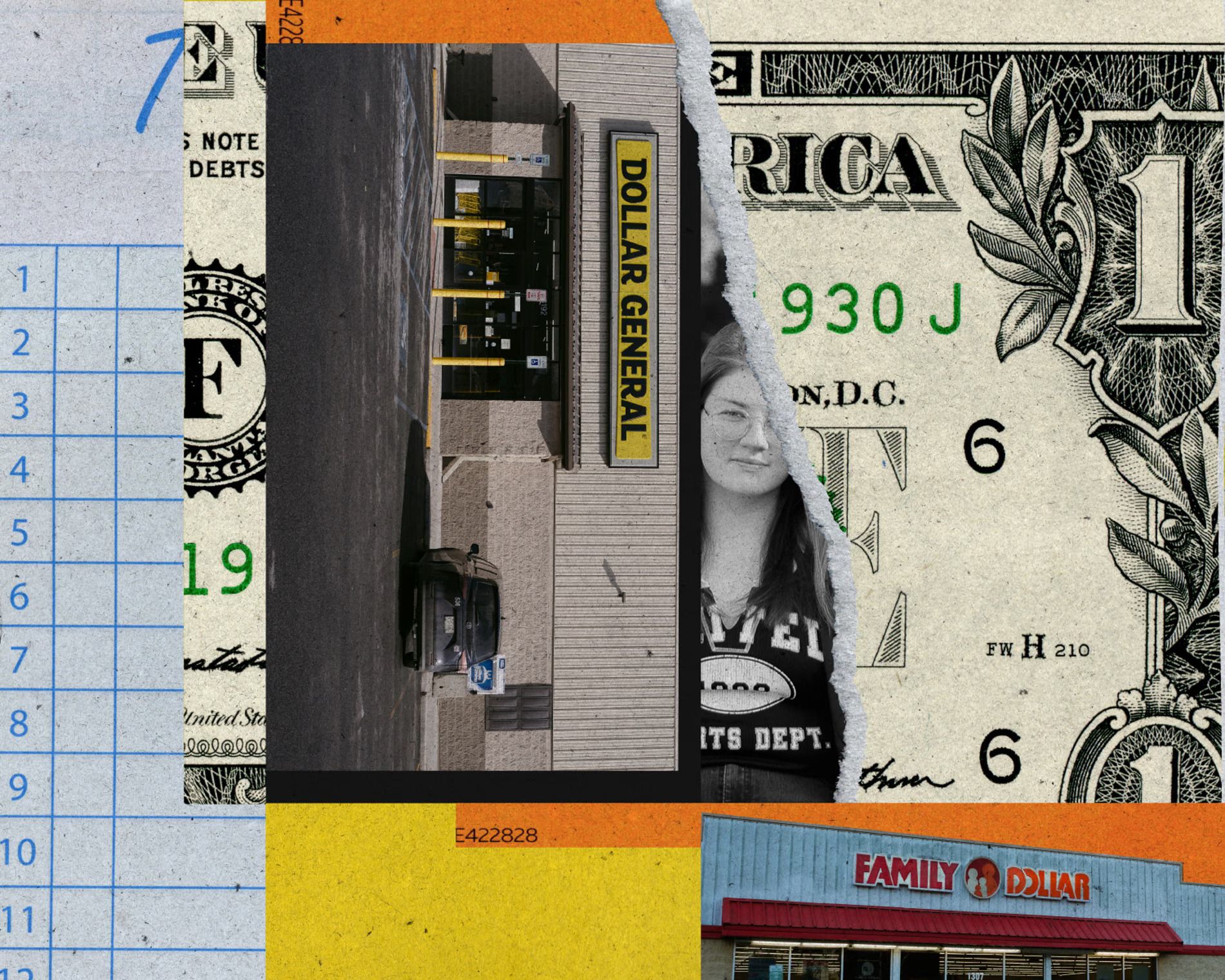
Photo illustration courtesy of The Guardian.
Dear friends,
For the last few months, I’ve spent considerable time inside chain dollar stores. They are cornucopias of cheap merchandise: frozen fish nuggets, squeezable mayonnaise, miniature disco balls, pruning shears, watermelon sangria, artificial succulents, kids’ pajamas. They promise big savings. And they draw shoppers from the lowest income tiers, families who are spending down to their last penny.
But, as my colleague Jocelyn C. Zuckerman and I chronicled in a new investigation for The Guardian, the low prices listed on the shelves at Dollar General and Family Dollar often don’t materialize at checkout. As the cost of living soars across America, the customers bearing the burden are those who can least afford it—customers who often don’t even notice they’re overpaying.
Jocelyn and I talked with shoppers, workers, and regulators all over the country. We visited stores ourselves. And we combed through public records and found more than 6,400 failed price-accuracy inspections by these two chains over the past four years. A Family Dollar in Utah flunked 28 inspections in a row; a Dollar General in Ohio posted the wrong price for 88% of sampled items.
I hope you’ll read and share this widely. These are tough economic times for many families, and dollar-store overcharges add even more stress.
Special thanks to our editor, Mike Hudson, whose commitment to investigative journalism has fueled me for the past 35 years. We’ve worked together on several important stories, and I feel fortunate for the collaboration. Thanks, too, to photographers Cornell Watson and Kelly Burgess.
Plus, news from here:
Last month, North Carolina felt the wrath of the federal deportation machine—payback, perhaps, for electing a wave of urban sheriffs who pledged not to cooperate with ICE. U.S. Customs and Border Protection rolled first into Charlotte and then into the Raleigh-Durham area, making hundreds of arrests and detaining U.S. citizens. Then they decamped to New Orleans.
The news media here have been vigilant, and continue to be. Others, too, have provided voices of clarity. I want to highlight three pieces of writing that stirred me:
Michael Graff on the rumors, real encounters, and protests that unfolded across Charlotte.
David Graham on the information vacuum and widespread fear in Durham.
Photographer Cheryl Gerber with a profane, sacred prayer for New Orleans.
Podcast series I’ve been listening to:
Shirlette Ammons’ “Tending,” a sound-rich and soulful journey through North Carolina, Georgia, Kansas, and Texas to meet the Black farm families who took on systemic racism at the USDA.
“When We All Get to Heaven,” a series by Lynne Gerber about how Metropolitan Community Church became a refuge for people who were sick and mourning during the AIDS crisis.
Season 2 of “The Harvard Plan,” which focuses on President Trump’s efforts to reshape higher education. Reported and hosted by Ilya Marritz.
What else I’ve been reading:
Vann Newkirk II on what the L.A. fires and Miami rain bombs portend for our mid-century climate.
Gwen Frisbie-Fulton on 13 strangers who organized against GOP budget cuts in a red California county.
Doug Bock Clark’s profile of a North Carolina judge who helped engineer the Republican takeover of Congress.
Kevin Williams and Audra D. S. Burch on what Thanksgiving is like on SNAP.
Melissa Sanchez and her ProPublica colleagues on a midnight raid in Chicago.
A 61-year-old New York Mets mystery by Josh Levin.
What my former students have written (I’m so proud):
Andrew Long on an atheist YouTuber who "still tears up when he talks about his relationship with God—the 'most intimate thing' he’s ever had.'"
Christa Dutton on the congressional district hardest hit by DOGE cuts, right here in Durham.
Natalie Alms on how thousands of SNAP users have lost their benefits to transnational crime rings—because the cards used to deliver food aid are so outdated.
Will Zimmerman’s oral history of the 2000 Yankees-Mets Subway Series.
Music I’ve got on repeat:
The Mountain Goats’ “Through This Fire Across From Peter Balkan,” an album-length story about the three survivors of a fishing-boat shipwreck. The title came to founder John Darnielle in a dream. Here’s the third track, which contains a fitting metaphor for life:
The first thing you learn is how far you can go with no gas in the tank,
and the next thing you learn is how cold it can get at night.
And where I’ll be telling stories:
Vancouver, British Columbia, on December 14, at this benefit for SPACE, a disability arts nonprofit whose mission—“creating a world that listens better to people who stutter, and everyone else”—I embrace. Plus, music by the brilliant Luke Wyland and a screening of the short film “We Are the Audience.” Come join!
I’ll send you one more newsletter this year: my annual roundup of the year’s best longform journalism. See you then.
All best,
Barry Yeoman