- Barry Yeoman: Unabridged
- Posts
- ‘I live in a city of heroes’
‘I live in a city of heroes’
A collection of some of the best writing about the federal occupation of Minneapolis and the local resistance. Plus, a song for the moment.

Barry Yeoman
January 28, 2026
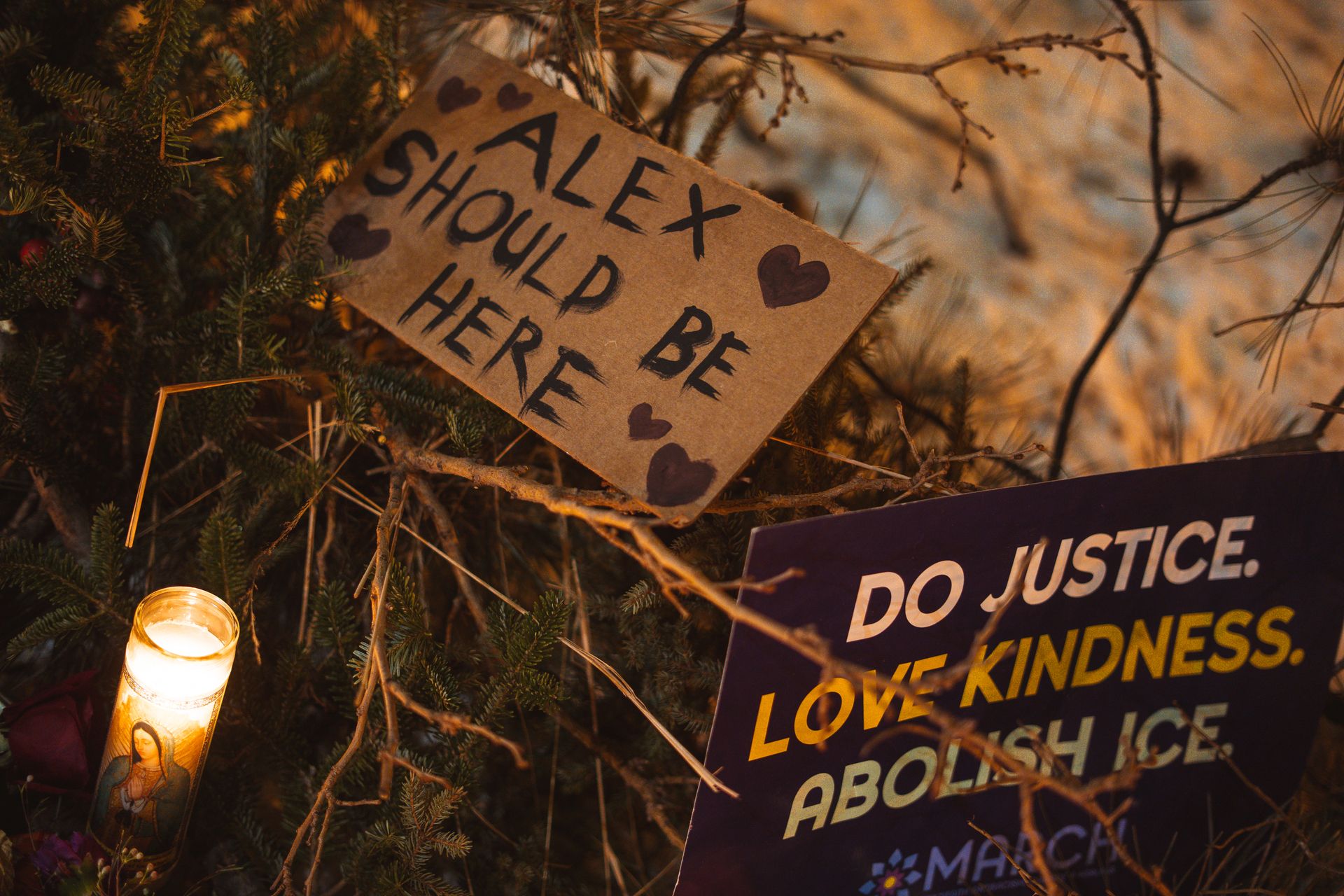
A memorial for Alex Pretti, who was shot and killed by federal agents. Photo by Chad Davis, republished under a Creative Commons license. More: chaddavis.photography/sets/ice-in-minneapolis.
Dear friends,
Like many of you, I have watched Minneapolis with a whirl of feelings: rage at the chaos and violence brought by federal agents, grief over the killings of Renée Good and Alex Pretti, deep respect for how Minnesotans have mobilized to protect their neighbors.
I have also felt overwhelmed by the sheer quantity of news. There is so much to take in.
So many journalists have done fine work under duress. In addition to the legacy media, I’ve been reading Sahan Journal, a nonprofit digital newsroom whose diverse staff reports on immigrants and communities of color in Minnesota. I’ve admired the work of Racket, a worker-owned alternative publication founded by former editors of the defunct City Pages. MinnPost, a policy-focused journalism nonprofit, has proven vital too.
I wanted to share with you some of the most stirring, most informative, best written, and most surprising articles—some short, some long—that I’ve seen about Minneapolis in recent days. Plus, the best song.
Zachary Zalman Green, in Racket, offered a first-person report from The Copper Hen, a restaurant converted into an ad-hoc field hospital where volunteer medics treated tear-gassed protesters as staffers ran around with cinnamon buns and coffee orders.
Verge published this remembrance of Alex Pretti by his childhood best friend, Kristen Radtke: “When Alex had his bedroom window open, I could hear him singing all the way from my own open window. His voice was operatic and strong, carrying above the suburban drone of leafblowers and lawnmowers.” (Alternate link.)
Charles Homans, a native Minnesotan, returned home to bear witness for The New York Times. He did not shy away from using the word “Gestapo.” Photos by Philip Montgomery.
Daci Platt attended an “upstander” training that offered ancient Jewish wisdom along with practical guidance. “Jews love to argue about a lot of things,” said a rabbi there. “Immigration isn’t one of them. If someone isn’t from here, you treat them like they are. That’s ancient wisdom, from all the way back to Exodus.” Published by Kveller.
The New Yorker's Ruby Cramer profiled Mayor Jacob Frey, who has been forced to govern a city under siege by its own federal government. (Alternate link.)
Robert F. Worth, writing in The Atlantic, described why the Minnesota resistance reminded him of Arab Spring. (He witnessed both.) Photos by Jack Califano.
Independent journalist Ken Klippenstein talked with current ICE and Border Patrol agents, and guess what? Some of them feel disgusted, too.
M. Gessen, a refugee from Russia who writes for The New York Times, explained why the federal occupation of Minneapolis should be labeled state terror: "Even in brutally repressive regimes, including those of the Soviet colonies in Eastern Europe, one knew where the boundaries of acceptable behavior lay. Open protest would get one arrested; kitchen conversation would not. ... A regime based on terror, on the other hand, deploys violence precisely to reinforce the message that anyone can be subjected to it."
Kelly McBride at Poynter explained the importance of documenting federal crackdowns: “The public should assume responsibility for creating an accurate record of what’s happening. ... This is not an act of protest. It is record-keeping.”
Sahan Journal’s Becky Z. Dernbach wrote about the children detained by ICE on their way to and from school.
At ICT (formerly Indian Country Today), Stewart Huntington reported on the return of American Indian Movement patrols to protect Minnesotans from overzealous policing.
Philip Kennicott described the power of that photo of 5-year-old Liam Conejo Ramos, wearing a blue hat with bunny ears and pompoms, just after he and his father were captured by ICE. Published by The Washington Post.
Racket solicited first-hand accounts of the occupation and resistance and received 7,000 responses. The staff compiled the best into what they call “a real-time oral history of the invasion.” Here’s one of my favorites:
The basketball moms are organizing.
The dorky pastors are organizing.
The preschool parents are organizing.
The dive bar regulars are organizing.
The book clubs are organizing.
The taekwondo dojangs are organizing.
The uncles group chat is organizing.
They want it to be something sinister but it's mostly because Minnesota is one of the most civic-minded states in the US and we care about all our friends' kids.
We are going to win.
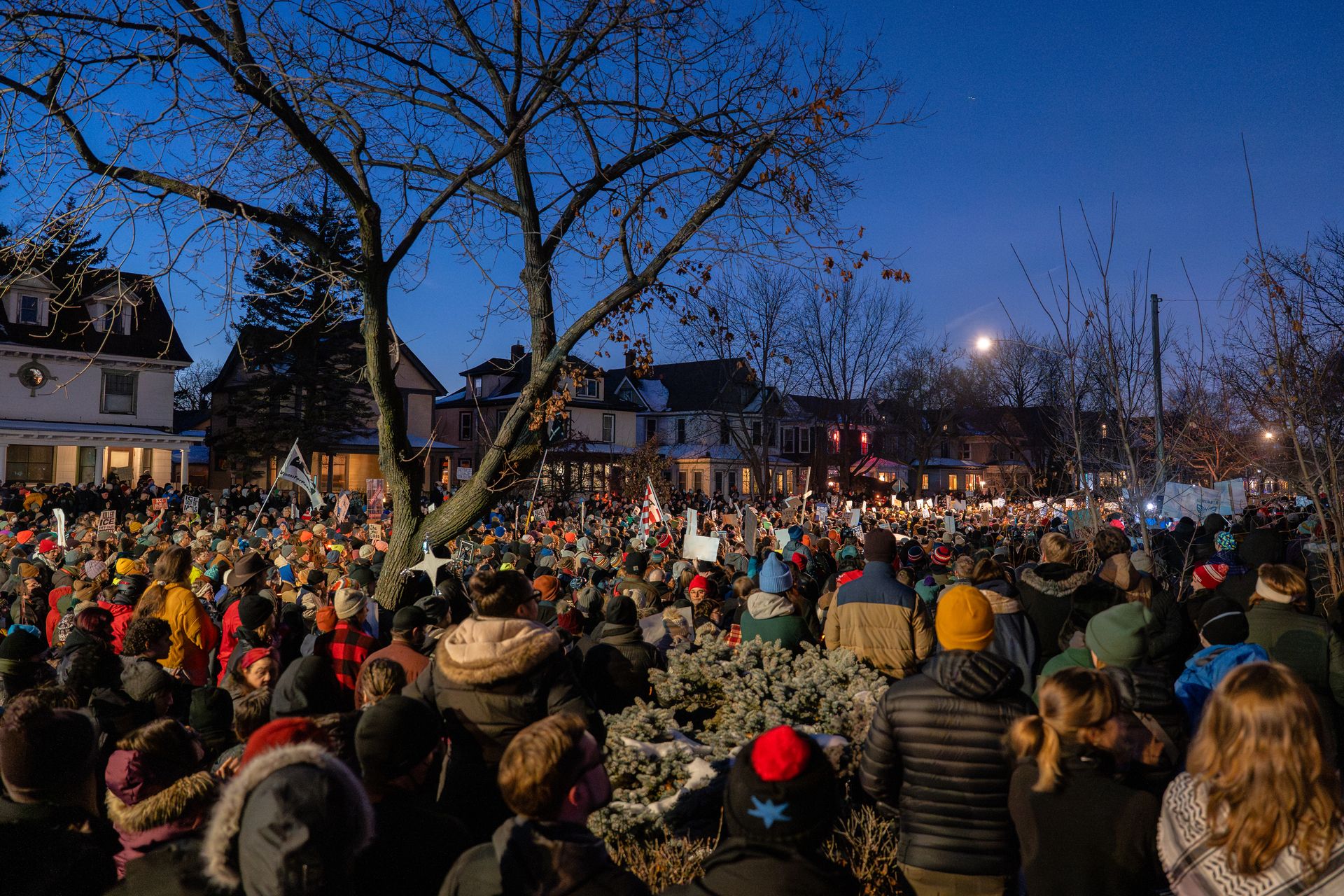
A vigil for Renée Good in South Minneapolis the day of her killing by an ICE agent. Photo by Chad Davis, republished under a Creative Commons license. More: chaddavis.photography/sets/ice-in-minneapolis.
Plus, a song for the moment: Billy Bragg pays tribute to a hero city.
See you soon.
All best,
Barry Yeoman